Podcast
Leadership Lyrics tackles all the issues facing leaders to create dynamic workspaces, where employees feel heard and are inspired. This podcast is hosted by Yoke van Dam from South Africa
Season 1
Season 2: Episode 1 Amir Ghannad
What does it take to turn a broken, low-trust workplace into the top-performing team in just 18 months? That’s exactly what Amir Ghannad did — and the shift that changed everything wasn’t a new strategy or a restructure. It was a leader deciding to take full ownership of the culture around them.
With over 30 years of global leadership experience, Amir brings a simple but powerful message: culture doesn’t change by accident. It changes when leaders do.
Listen here
Season 2: Episode 2
Why Your Best People Leave Gaurav Rampal | The Horseman Way™
Horses can’t be managed through authority, titles or positional power. They respond to who you actually are before you’ve said a word.And what they reveal about a leader in minutes is often what that leader’s team has been experiencing for years.
In this episode we explore the leadership behaviours that cost organisations their best people — and what it actually takes to change them. Listen here
***
Season 2: Episode 3
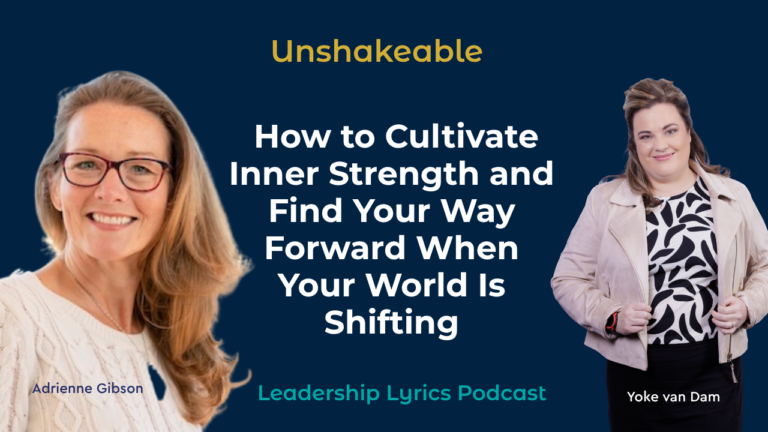
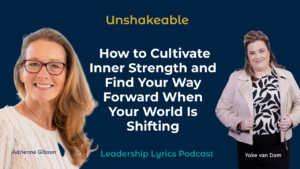
Being unshakable-when your inner world is shifting-
Adrienne Gibson
Adrienne shares one of the most honest, raw and ultimately powerful personal transformation stories I have heard — a journey that spans losing 250 pounds, leaving a 20-year corporate career, ending a 25-year relationship, and a health scare. This episode is for anyone standing at the edge of a change they are afraid to make — and for anyone already in the middle of the storm, wondering how to find their way through.
Season 2: Episode 4
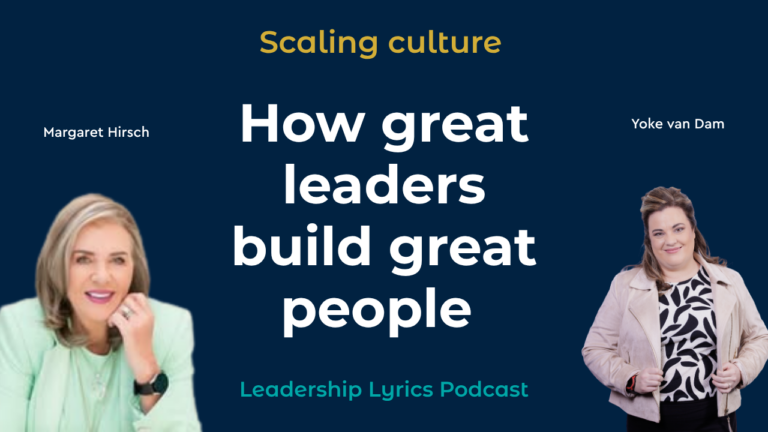
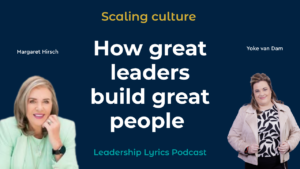
How great leaders build great people with Margaret Hirsch
“Your staff will not listen to what you say. They will do what you do.”
Margaret Hirsch returned to Leadership Lyrics five years after her last appearance, and she held nothing back. We spoke about what Disney University taught her and Allan about building culture deliberately, why Hirsch’s hires for attitude ahead of skill, and how they prepared their son Richard to take over the business.
The question she leaves every leader with: what happens in your business by design, and what happens by accident? (Read more)
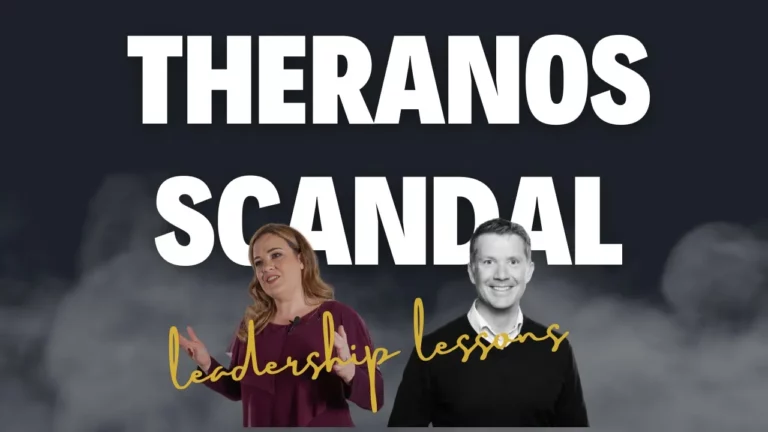
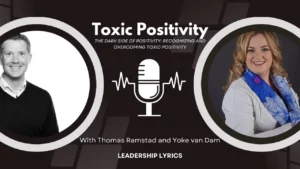
Season 1 Unmasking Theranos: When Leadership Loses Its Moral Compass with Thomas Ramstad
Some stories stop you in your tracks. The Theranos scandal is one of them.
In this episode, Thomas Ramstad and I dive deep into one of the most jaw-dropping leadership failures of our time — the rise and catastrophic fall of Elizabeth Holmes and Sunny Balwani, and the company they built on illusion, intimidation, and lies.
It started with a documentary rabbit hole. After watching The Dropout miniseries, I couldn’t stop thinking about how someone so seemingly visionary could lead so destructively. Elizabeth Holmes didn’t just mislead investors — she endangered patients, silenced employees, and built a culture where fear replaced integrity at every level.
What struck Thomas and me most wasn’t the fraud itself. It was the gap — the enormous, devastating gap between the values Theranos proclaimed and the behaviours its leaders modelled every single day.
In this conversation, we unpack:
- How Theranos’ deceptive practices moved from boardroom spin to real harm for real patients
- What a truly toxic workplace looks and feels like from the inside
- Why whistleblowers are often the most courageous leaders in the room — and how they were systematically crushed
- The personal reflections this story triggered for both of us about our own values and non-negotiables
Because here’s the truth that this story keeps coming back to: leadership is not what you say. It’s what you do when no one is watching — and what you allow when everyone is.
Holmes and Balwani are now serving prison sentences. But the real cost? Thousands of patients who received false test results. Employees who were gaslit and silenced. A company that burned $900 million in investor funds. And a profound reminder of what happens when ambition completely swallows conscience.
This one is personal for me. I believe deeply that values aren’t a wall poster — they’re a daily practice. When leaders disconnect from that, the consequences don’t stay in the boardroom. They ripple outward and hurt real people.
Press play. This story has lessons every leader needs to hear.
Listen here
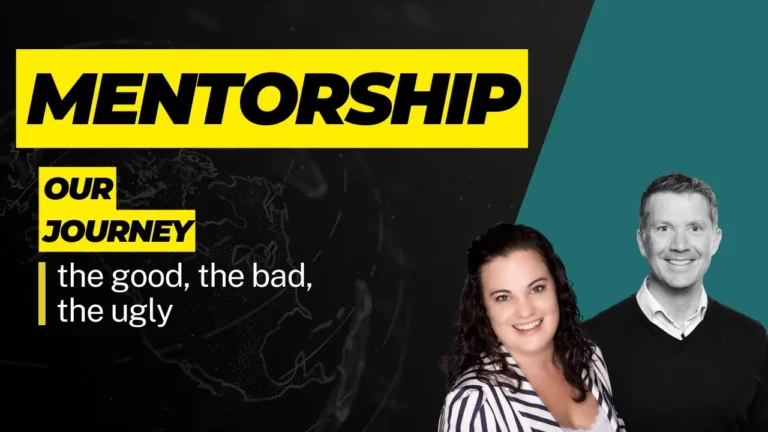
Mentorship: The good, the bad, the ugly with Thomas Ramstad
I’m often asked what it really takes to build a mentorship culture inside a business.
So in this episode, Thomas Ramstad and I go beyond theory—and into the real story. The good, the bad, and the uncomfortable truths of mentorship.
What started as a one-year commitment through the Cherie Blair Foundation turned into a six-year relationship that continues to evolve. That alone tells you something: mentorship, when done right, doesn’t follow a timeline—it builds transformation.
Thomas shares candidly about the weight of being a mentor—the responsibility, the need to stay present and think on your feet, and the challenge of balancing mentorship with a full career and life. He also speaks openly about navigating conversations as a second-language English speaker, and what that requires mentally and emotionally.
From my side, I unpack what it means to be a committed mentee. Accountability. Preparation. Ownership. Mentorship is not passive—you don’t receive value, you create it.
I also draw on my own journey—from Toastmasters to the lessons I learned from my late mentor, Vic Brits, and the patterns I’ve seen in mentees who truly succeed.
This is a grounded, honest conversation about what mentorship really demands—and what it can unlock when both sides show up fully.
If you’re serious about developing leaders, don’t skip this one.
Why Micro-management sucks with Thomas Ramstad
In this episode, I’m joined by Thomas Ramstad, a seasoned software engineer from Norway, for a conversation that goes far beyond code.
We explore what it really means to lead—whether in the workplace or at home. Thomas shares powerful insights on coaching, mentoring, and creating the space people need to grow. Because growth doesn’t happen under pressure—it happens with trust.
We draw an unexpected but deeply relevant parallel between parenting and leadership: the importance of allowing people to make mistakes, learn, and step into their own capability.
We also tackle the hidden cost of micromanagement—how it erodes confidence, stifles contribution, and ultimately limits performance.
If you’re serious about building high-performing teams, this conversation will challenge you to rethink control, elevate trust, and better align individual potential with organisational goals.