

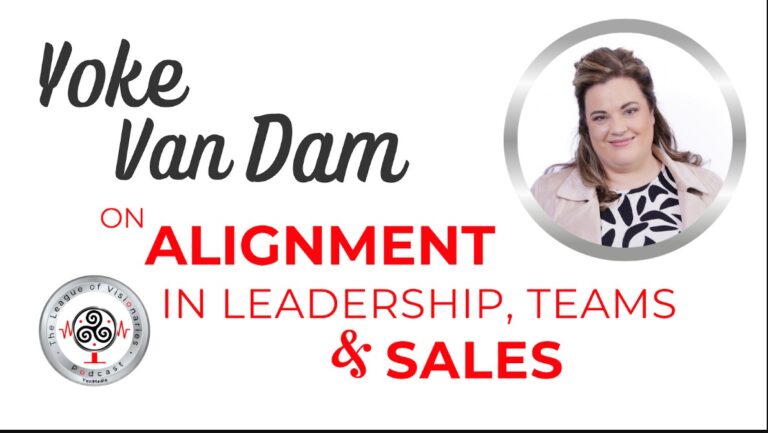

Near the end of my conversation on The League of Visionaries Podcast, host Marie-Thérèse Le Roux asked me about a book that changed how I think about healing. I told her people need to read Edith Eger’s “The Choice” at least three times.
Eger survived Auschwitz and went on to become a psychologist. Her book carries the weight of that history, but the part that stayed with me most is her work on forgiveness. Not the version of forgiveness we usually hear about, where you excuse someone else for what they did to you. The harder version. The one where you have to forgive yourself for who you used to be.
I have sat across from enough leaders to know this pattern well. A person carries an old version of themselves into every room. The manager who once handled a conflict badly and still flinches from hard conversations. The founder who made a call years ago that hurt the business, and now second-guesses every decision. The team member who let someone down and has quietly decided they are not to be trusted with anything important again, including by themselves.
That old version of you was not willing or able to learn the lesson yet. That is all. It does not mean the lesson never landed.
This is where the Kintsugi philosophy earns its place. In the Japanese art of Kintsugi, a broken bowl is not thrown away. The cracks are filled with gold, and the repaired piece becomes more valuable than the original. The break is not hidden. It becomes part of the story.
I built The Kintsugi Method™ on that same principle, applied to teams and leaders instead of pottery. A team that has been through conflict, a leader who has made a costly mistake. The mistakes you can’t bury. They are the material you work with. The gold goes into the crack, not around it.
Eger’s writing on forgiveness gave me language for something I had been coaching leaders through for years without naming it properly. You cannot lead a team out of dysfunction while still punishing yourself for the version of you that helped create it. Release her. Release him. That person did the best they could with what they knew at the time.
When Marie-Thérèse asked me, at the end of our conversation, whether I was glad she’d asked me about that book, my answer was simple. So much. Eger’s voice carries hope and hard-won wisdom in equal measure, and it belongs on the shelf of anyone doing the work of leading people through change.
If you want to hear the full conversation, including how this connects to ethical influence and high-stakes team alignment, you can find the episode of The League of Visionaries Podcast here