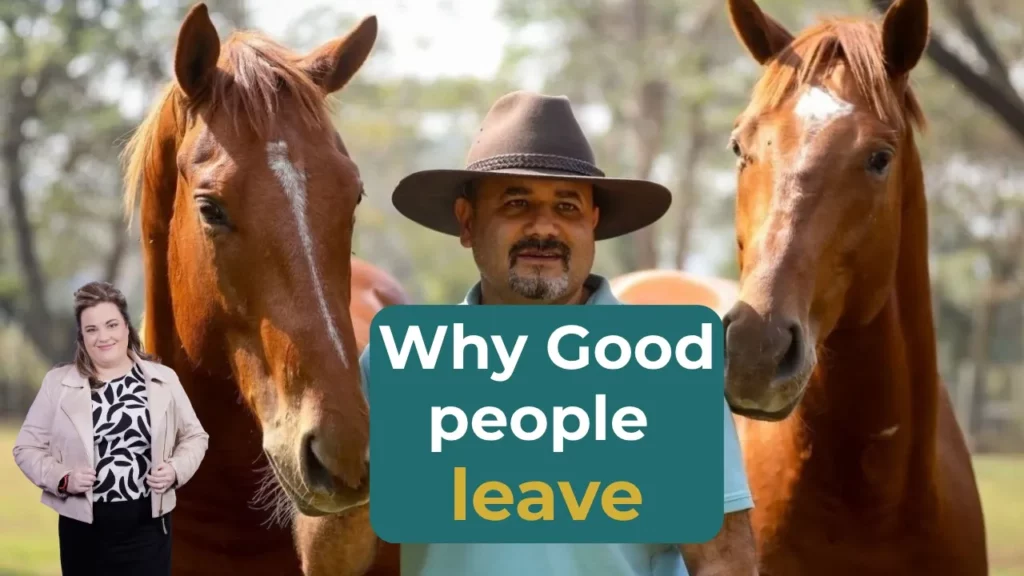

Something happens in every Horseman Way™ session that Gaurav Rampal has watched play out dozens of times. A confident, senior leader walks up to a horse expecting, on some level, the same response they get in a boardroom. And the horse looks at them, looks away, and goes back to eating grass.
No deference. No compliance. No interest in the org chart.
What that leader does next reveals more about their leadership than any 360-degree review ever could. I recorded a conversation with Gaurav for Leadership Lyrics recently, and it’s one that hasn’t left me since. Gaurav has spent over 20 years in the international thoroughbred horse industry. He’s a Penguin-published author, a Dale Carnegie certified trainer, and the only Indian to co-own a Kentucky Derby winner, a horse called Authentic, which was not an accident of naming. Through The Horseman Way™, he uses horses as a mirror for how leaders actually show up, as opposed to how they think they show up. The gap between those two things is where his work lives.
Your presence arrives before you do
Gaurav referenced a German study called SPANE, which measured the electromagnetic frequencies the body transmits. The finding: authenticity is the highest frequency. What you genuinely feel and believe gets transmitted more powerfully than your words.
Horses feel this. They follow clarity and trust. If you’re conflicted, the horse gets confused. If you’re aggressive, the horse mirrors it. If you’re present and grounded, the horse responds in kind.
Your team works the same way. They may be more polite about it. They may not pin their ears back or refuse to move. But they feel the incongruence between what you say and what you actually mean, and over time, they stop bringing you their full effort, their honest opinions, and eventually themselves.
Control is expensive and the invoice just arrives late
Leaders who rely on control tend to call it something else. High standards. Being across the detail. Accountability. But what lands with a team is fear, confinement and a fundamental lack of trust.
Gaurav is clear about the cost: a Gallup survey found that disengaged employees cost the global economy $8.8 trillion a year. That’s not an HR statistic. That’s the compounded price of leaders who never learned to lead without controlling.
With horses, the effect of excessive control is immediate and impossible to miss. The horse shuts down, resists, or complies just enough to get through the session. If you’ve ever managed someone who does exactly what’s asked and absolutely nothing more, you’ve already seen this.
Psychological safety starts with the leader, not the policy
We talk about psychological safety in organisations as though it’s something that gets implemented. A workshop, a policy, a cultural initiative. Gaurav’s view is more demanding: it starts with the leader’s own willingness to go first.
We’ve been conditioned, all of us, to show the achievements and bury the struggles. The result is teams full of people carrying things they’ll never say out loud, led by people performing confidence they don’t always feel.
Drawing on Brené Brown’s research, Gaurav reframes vulnerability as courage. And he offers something practical for any leader wanting to shift this: when something goes wrong, focus on the clean-up rather than the blame. “A bad decision made in good faith is not a bad decision. If people have safety, they will take risks.”
Remove that safety and you don’t just affect the individual. You calcify the whole organisation.
The hardest part: letting other people shine
Servant leadership sounds straightforward until you’re the person who built the business from nothing, or the one who was the top performer before they got promoted to manage the top performers.
Gaurav names the barrier honestly: insecurity. When a leader’s identity is wrapped up in being the one with the answers, developing others starts to feel like a threat. The person who could step up becomes a risk rather than an asset.
Self-awareness is the way through, knowing your values, being honest about what drives your behaviour, and being willing to examine the gap. “If your cup is full, there is no insecurity,” Gaurav said. “But the moment there is insecurity, you will not train the second person. You will not let go of control.”
I’ve watched this play out in organisations where one person holds all the relationships, all the institutional knowledge, all the client trust, and has, often without realising it, become a ceiling for the business rather than a foundation for it. Succession planning done well is less about process and more about how secure a leader genuinely is in themselves.
The one thing
I asked Gaurav to leave our listeners with a single piece of advice, one thing they could take back and actually use.
He didn’t give me a tool or a model.
“Spend time in stillness, silence and solitude. It’s a great process to discover yourself. And your work of life should be to discover yourself because everything else is available on Google.”
For leaders who fill every gap with action and every moment of discomfort with a new initiative, that is probably the most challenging and most necessary advice in this entire conversation.
The horses already knew. The question is whether you’re willing to sit still long enough to hear it.
Listen to the podcast episode from the 26th June 2026 here