


There’s a dangerous illusion that organisations sometimes fall into: confusing short-term results with sustainable success. Numbers look good on paper, so leadership assumes the team is fine. But what happens when strong performance is masking a culture on the verge of collapse?
That was exactly the situation facing one Credit Control team after a significant structural change. On paper, the story was encouraging — the new structure was working, and the team had just delivered one of their best-performing months. But underneath those results, something far more troubling was unfolding.
The Hidden Cost of a Toxic Culture
Despite the strong numbers, the team was caught in a cycle of blame, emotional reactivity, and victim mentality. HR escalations were frequent. Trust between colleagues had eroded. Leadership authority was openly undermined. The team was, in organisational development terms, firmly stuck in the “storming” phase — unable to move toward the kind of alignment that produces lasting performance.
This is a pattern many leaders recognise, but few know how to name clearly: results being achieved despite the culture, not because of it.
And that distinction matters enormously — because cultures like this carry a compounding cost. Left unaddressed, dysfunction of this kind leads to declining performance, increased HR dependency, breakdown in collaboration, and eventually, the loss of key talent. The very people who held the team together walk out the door, and the metrics follow close behind.
The question isn’t whether a toxic culture will eventually impact performance. It will. The question is how much damage accumulates before someone decides to act.
What a Culture Reset Actually Looks Like
A targeted team intervention was designed not to fix performance — performance was already there — but to make performance sustainable. This distinction is worth sitting with. Too many organisations invest in performance programmes when what they actually need is a culture reset.
The intervention focused on three core shifts:
Mindset: from victim to ownership. When teams operate in a blame culture, individuals protect themselves by externalising responsibility. The work of shifting this requires naming the pattern clearly, building self-awareness, and providing practical tools for accountability language — a shared framework to identify victim behaviour and redirect toward ownership in real time.
Behaviour: from reactive to accountable. Emotional reactivity is corrosive in high-pressure environments. The team worked through practical communication and conflict resolution tools, including how to give and receive feedback effectively and how to manage emotional responses under pressure. Role plays and real-time reflection made these tools concrete and immediately applicable.
Dynamics: from toxic to trust-based. Psychological safety — the belief that you can speak up without fear of punishment or humiliation — doesn’t emerge by accident. It’s built through deliberate action. The intervention created a structured space for the team to establish shared standards, co-create a team commitment charter, and align on a common identity: who we are as a team and how we show up.
The Deliverables That Create Lasting Change
One of the key reasons culture interventions fail is that they end with good intentions but no practical anchor. People leave a workshop feeling inspired, return to their desks, and within two weeks are back to their old patterns.
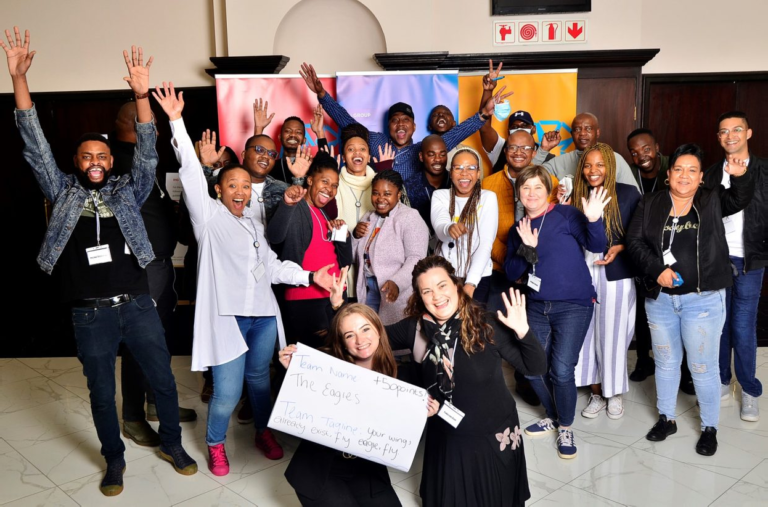
This intervention was structured to prevent exactly that. The team left with six co-created deliverables:
A Team Commitment Charter that spelt out what success looks like, expected behaviours, and how team members will hold each other accountable. A defined team identity — a shared understanding of who they are and how they show up daily. A Culture Map with practical guidelines for communication, conflict, and respect in action. An Accountability Language Framework to call out victim behaviour and shift toward ownership. A Communication and Conflict Toolkit for managing difficult conversations. And Purpose Alignment — clarity on individual and collective “why.”
These aren’t motivational posters. They are working documents — practical, team-owned, and regularly referenced. The difference between a culture that shifts and one that reverts often comes down to whether the team has something tangible to return to.
The ROI That Doesn’t Show Up on a Spreadsheet
So what is the return on investment of an intervention like this? Some of it can be measured. Reduced HR escalations translate directly into saved management time and legal risk. Improved collaboration reduces duplication, rework, and communication breakdowns. Stronger psychological safety has been consistently linked in research to higher team performance, greater innovation, and lower attrition.
But some of the ROI is harder to quantify — and no less real. When a team moves from disconnected to aligned, from reactive to responsible, the energy that was previously spent on blame, defensiveness, and political manoeuvring gets redirected toward the work. People start solving problems instead of creating them. Leaders can lead instead of firefighting.
In high-pressure environments, this shift is the difference between a team that burns out and one that builds resilience.
The Leadership Lesson
Perhaps the most important insight from this case is also the simplest: don’t wait for performance to drop before you address culture. By the time the numbers start reflecting dysfunction, the damage is already deep — and far more costly to repair.
The team in this case study was fortunate. Leadership recognised the warning signs while performance was still strong and made a proactive investment in resetting the culture before the cliff edge arrived.
That’s not a soft decision. That’s a strategic one.
Culture is not the opposite of performance. In high-pressure, high-stakes environments, culture is the engine that determines whether performance is a one-off result or a repeatable standard. Invest in it accordingly.
Yoke van Dam is an organisational development practitioner and founder of Y-Grow Pty Ltd, specialising in team culture resets, leadership development, and sustainable performance. Book a discovery call with her here